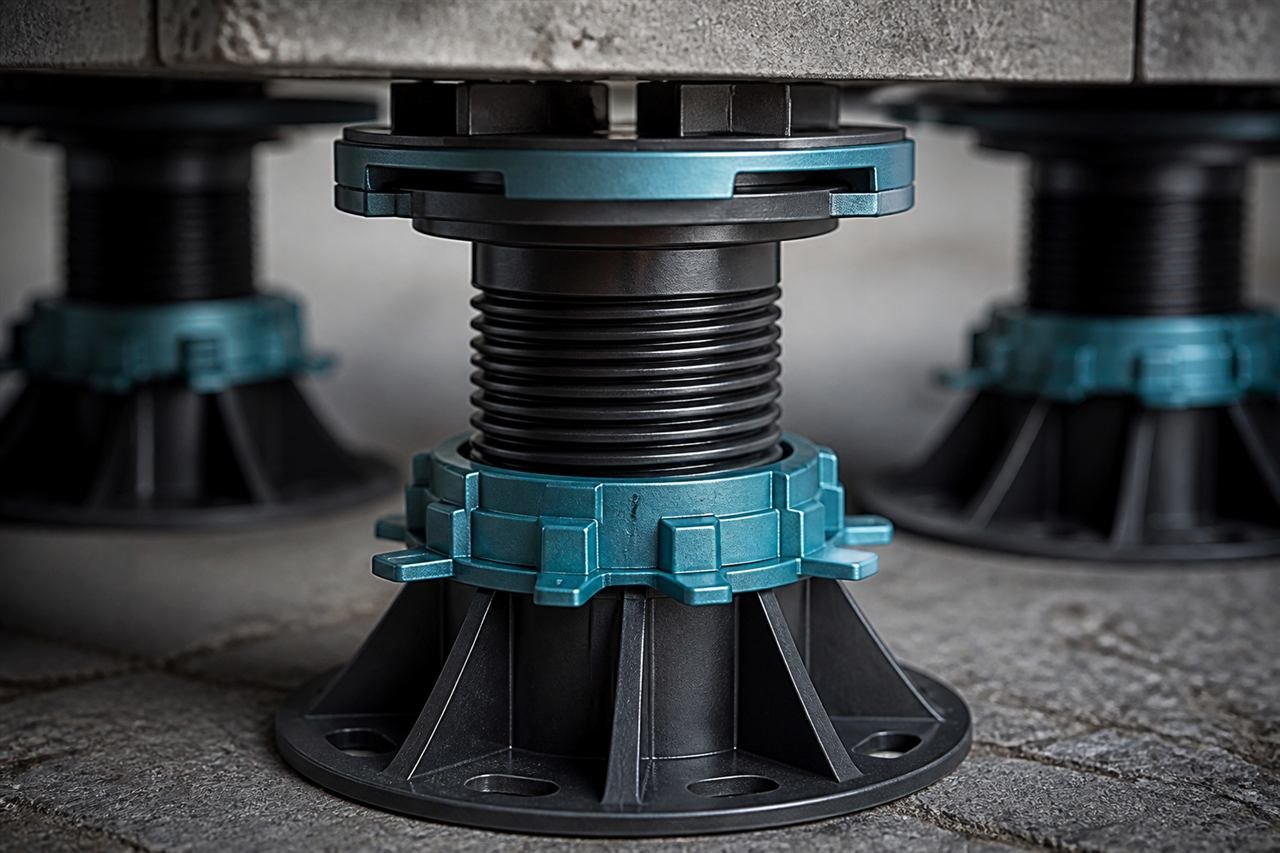
Two features separate basic posts from professional adjustable floor pedestals: precise height adjustment and slope correction. Together they turn imperfect slabs into quiet, flat access floors.
Height adjustment
A threaded stem moves the head up or down to hit finished floor height. Locking nuts freeze the setting. On large U.S. floor plates, crews work to a laser plane, then micro-adjust pedestals that sit outside tolerance.
Slope correction
When the slab falls or crowns, a rigid head would tilt the panel corner. Slope-correcting heads articulate so the panel stays planar while the stem follows the slab. That reduces rocking panels and edge lippage.
Field best practices
- Do not use maximum thread engagement as a substitute for the correct pedestal series
- Re-check locks after the first week of occupancy in vibration-prone rooms
- Replace damaged threads; do not force seized nuts
Spec language you can reuse
“Provide adjustable pedestals with locking height adjustment and slope-compensating heads capable of maintaining panel planarity within manufacturer tolerances across slab variations encountered on site.”
See height ranges on our product pages or call +1 516 360 1155 for technical help.
Need pedestals for your project?
Talk with our team about adjustable and heavy-duty raised floor pedestals for U.S. commercial sites.