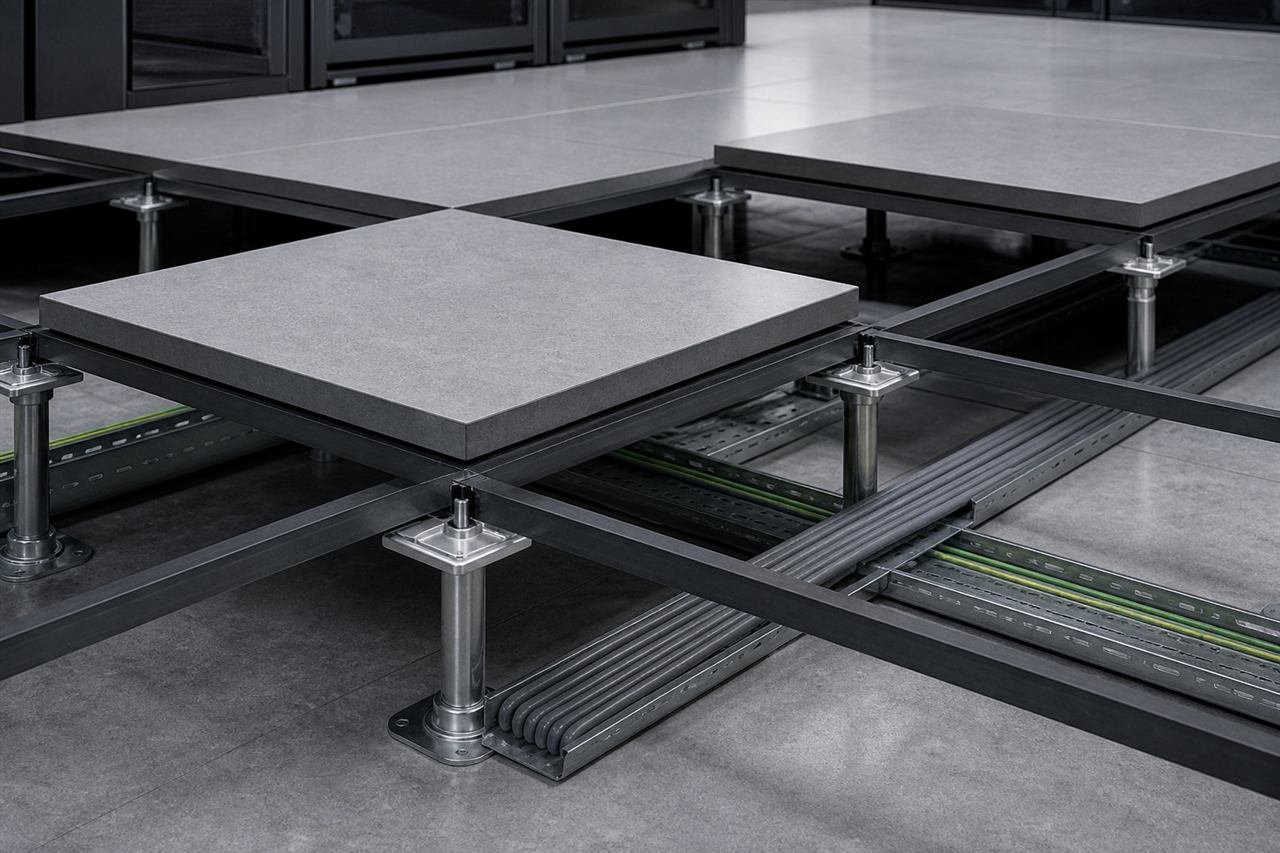
Selecting floor pedestal load capacity is one of the most important decisions in a raised access flooring package. Underspecify and you risk deflection, panel chatter, or failure under racks and carts. Overspecify and you inflate cost without benefit.
Understand uniform vs. concentrated loads
Manufacturers publish uniform load (psf) and concentrated or ultimate loads at the pedestal or panel. Office foot traffic differs from a loaded server rack wheel or a pallet jack. Map real equipment footprints—not just average occupancy—before you pick a series.
Typical U.S. application brackets
- General office — moderate pedestrian loads, rolling chairs, light carts
- Equipment / telecom rooms — higher concentrated loads at cabinet corners
- Industrial / heavy commercial — heavy duty pedestals with reinforced stems and larger bases
Safety factors and design practice
Engineers apply factors of safety above expected service loads. Ask suppliers for tested values and clarify whether ratings are for the pedestal alone or the full panel-stringer-pedestal assembly. System ratings are what walkability and code conversations usually rely on.
Other factors that affect capacity
Base plate size, slab condition, stringer design, and panel core all influence performance. A strong pedestal on a soft or uneven slab still fails. Surface prep and correct torque on lock nuts are part of achieving published capacity.
Quick checklist before you buy
List FFH, panel size, live load assumptions, rolling load cases, and any seismic notes. Share that package when you request a quote so recommendations stay conservative and cost-efficient.
Need pedestals for your project?
Talk with our team about adjustable and heavy-duty raised floor pedestals for U.S. commercial sites.